Showing posts with label rose history. Show all posts

Friday, October 3, 2014

2015 Rose Introduction

2015 Rose Reveal

Witherspoon Rose Culture is proud to introduce these roses into our 2015 collection!

Our Catalog Launch Party is happening 
October 4th 10am-4pm!


Hybrid Teas and Grandifloras

American Dream (WINbur)
Live the American Dream by filling your rose garden with velvety red, long stemmed roses.  With large, spiral blooms, this excellent cut rose will stand proudly in any arrangement.  (3’w x 5-6’h) (Certified)

Color Magic (JACmag)
Each bloom exhibits a wide spectrum of pink hues ranging from salmon to apricot and pink kissed ivory to deep rose.  With colors that deepen in the sun and an intense fruity fragrance, this rose will excite the magic lover in all of us. (3-4’w x 4-6’h) (Certified)


Dolly Parton
Very large, voluptuous burnt orange-red blossoms invite you over to experience the tantalizingly strong fragrance of sweet rose.  Long lasting blooms live up to their namesake as this rose is a show stopper!  (4’w x 4-5’h) (Star)


The McCartney Rose™ (MEIzeli)
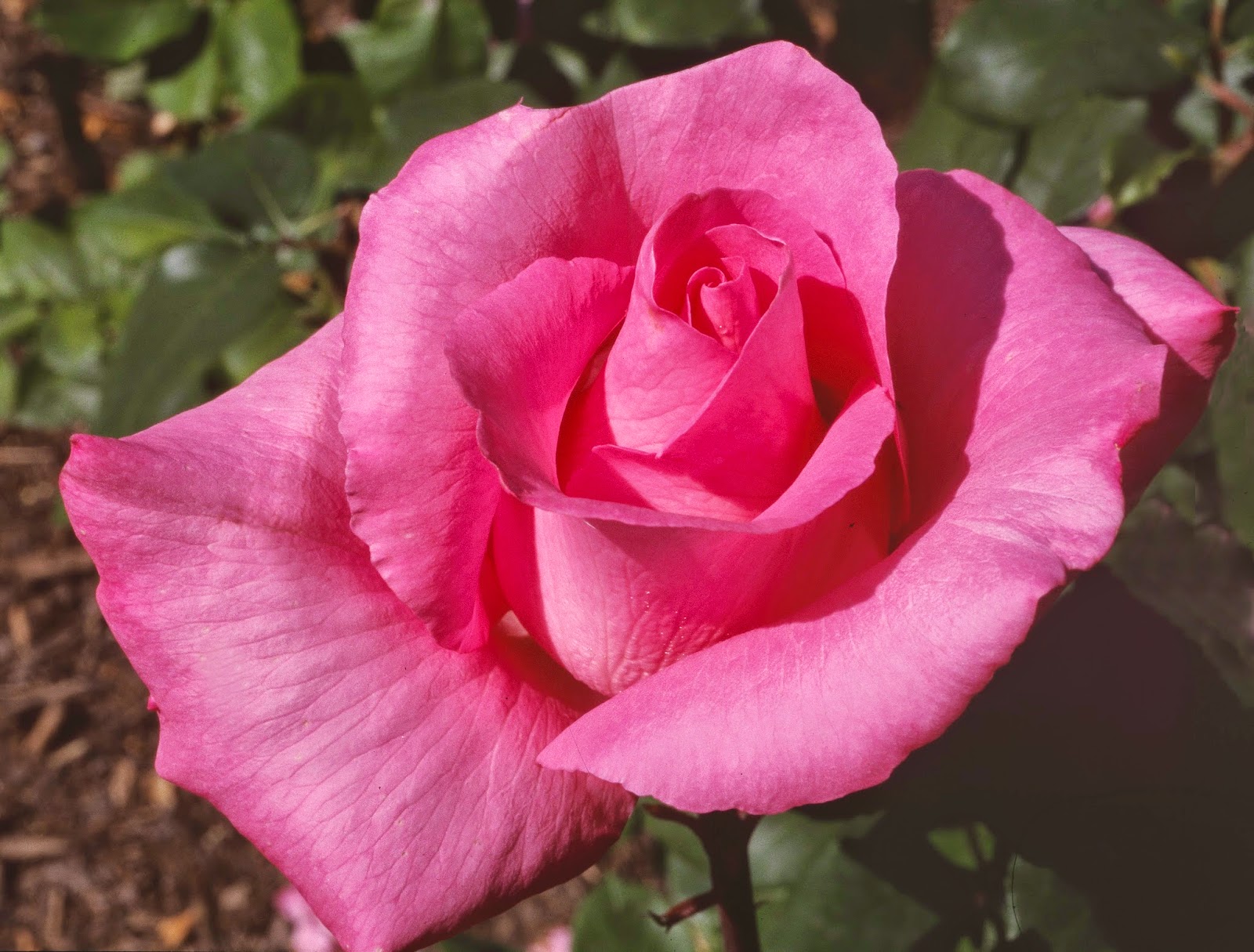
This attention grabbing rose was given to Sir Paul McCartney by his record company to celebrate his birthday.  Massive, brilliant pink blooms pull you in to experience a mesmerizing candy-like fragrance.  (2-3’w x 3-6’h) (Star)
The Wake Forest University Rose
EXCLUSIVE! You don’t have to be a Demon Deacon to appreciate the golden color of this university rose!  This grandiflora, with good disease resistance and a light apple fragrance, is a great bloomer with blossoms that deepen in color with cooler temperatures.  With $10 from every rose purchased going to the general scholarship fund, you can feel good about adding the first university rose to your garden. (3’w x 5-6’h) (Weeks)


Sedona (JACmcall)
Warm blossoms, reminiscent of a desert sunset, burst open to reveal layers of reds, corals, and oranges.  As the bloom spirals open, it will entice you to take a closer look with its strong pear fragrance.  (3-4’w, 5-6’h)  PPAF (Weeks) 


Floribundas

Columbus (WEKuz)
Columbus will entice you to explore the deepest corners of the garden with its deep pink, well-formed blossoms that do not fade in the sun.  (3’w x 4’h) PP8183 (Weeks)

Climbers

Cl. Above All™ (CHEWesic)
This modernized version of the classic Westerland has the same salmon-orange clusters of blooms, but with more petals and improved flower production.  Combine that with a fruity fragrance, great disease resistance, and excellent vigor for a modern climber that will continuously bloom spring through fall. (10-14’h) PPAF (Weeks)


Cl. Coral Dawn®
Deep pink buds open into well-formed, soft pink blooms on this vigorous climber.  Blooming in fragrant flushes throughout the season, this climber puts on a show you will not want to miss! (8-12’h) PP1117 (Certified)


Cl. Malvern Hills® (AUScanary)
Clusters of small yellow blossoms repeatedly bloom in flushes on long arching canes. Experience the delightful rose fragrance that only a David Austin can provide with this free flowering, almost thornless climber. (12’h)


David Austin

Claire Austin (AUSprior)
There is an elegance that only a white rose can bring to a garden.  Let the strong scent of myrrh and vanilla invite you in to fully experience the large cupped bloom.  Long arching canes, coupled with disease resistance and vigor, will add subtle elegance to any rose garden for years to come.  (3’w x 4-5’h) PP19465 


Tree Roses

Weeping China Doll
Sprays of ruffled pink blossoms on long slender canes spill over to create an alluring display worthy of becoming a focal point.  Moderate temperatures will increase bloom production. (48”h) (Weeks)


Wednesday, June 18, 2014

Aphids: Vampires of the Plant World

Aphids: Vampires of the Plant World

What Are Aphids?

Aphids are small, soft bodied insects that feed on plant sap.  These sap suckers can be green, brown, black, or even pink, but regardless of their color they are all after the same thing. I know you are thinking to yourself, how much damage could these little guys do? Large colonies of aphids sucking sap from the rose bush cells will cause blooms to become deformed and they will not open properly. Unfortunately these vampires of the plant world are not deterred by garlic wreaths or wooden stakes, so let's explore what the home rose gardener should do to protect their blooms.


Use a Slow Release Fertilizer

Aphids are heavy nitrogen feeders.  This turns well fertilized plants, such as roses, into a well-stocked buffet line for sap sucking insects. In order to fertilize rose bushes without providing a large meal for aphids, we need to feed the bush with a slow release fertilizer.  Quick release fertilizers will push a large amount of nitrogen into the bush quickly making it a tasty treat for aphids.

Invite Beneficial Insects to the Party

Ladybugs, Green Lacewings, and Pirate Bugs will all enjoy feasting on your Aphid population, but they tend to be fashionably late to the party. They show up after the Aphid population has already exploded in the garden. In order to encourage the beneficial insects to show up earlier, we need to create a welcoming environment before the Aphids take over. Here is a quick list of companion plants that will encourage these beneficial insects to to make your garden a home.


Ladybugs

  1. Common Yarrow
  2. Ajuga
  3. Marigold
  4. Dill 

Green Lacewings

  1. Fern Leaf Yarrow
  2. Dandelion
  3. Golden Marguerite
  4. Coriander 

Pirate Bugs

  1. Corn
  2. Soybeans
  3. Grapes
  4. Alfalfa 

Water Hose Riot Control 

I know this seems counterproductive for rose care, but spraying the colonies of Aphids off the rose bush with a garden hose is a simple cost effective way to get rid of Aphids.  You get the same effect with a spray bottle set to the stream function to blast those buggers off the bush. Make sure you keep up with your fungicide application if you go this route and it is also a good idea to do this in the morning so the rose bushes have the rest of the day to dry. 


Last Resort Insecticidal Soap

Aphids have soft bodies that have openings called spiracles that they use for respiration.  Insecticidal soaps work by covering these openings and suffocating the Aphids.  It only takes an hour to work, but it might take multiple applications to get the problem under control as it only works when the soap makes contact with the Aphid.  The residue left by the insecticidal soap is non-toxic so it is safe for local wildlife.


Helpful Hints

Thistle, Mustard Plant, and Milkweed will only encourage Aphids to populate a garden. Keeping a rose garden clear of these weeds will help control the Aphid population as well as other problem insects.

Wednesday, August 28, 2013

Fall Blooms are Starting to Open!

It's not quite Fall yet in North Carolina, but the weather is cooling down!  Not only do we love the cooler temps, but so do our roses.  Check out some of the blooms that are opening now!

Mellow Yellow

Mellow Yellow

Rio Samba

Rio Samba

R.K. Witherspoon

R.K. Witherspoon

Sexy Rexy 
Summer Love


If your bushes are not producing enough blooms or if they just need a little extra umph, take advantage of our online sale on Super Bloom! Now through August 31, 2013.


www.witherspoonrose.com


Friday, August 2, 2013

Designing for Color in the Garden

DESIGNING FOR COLOR IN THE GARDEN

First things first, look at your landscape and decide where you would like to plant roses.  Some Consider what impact the roses will have on the existing landscape and how the colors you choose will blend or contrast with the rest of the garden. 
Are you looking for more excitement in your garden or would you like it to be a restful and serene retreat from the world?

COLOR PROPERTIES


 Cool Colors 
Tend to look and feel more calm, serene, restful.  Look for lavenders, whites, soft pinks, or pastels of apricot and yellow.  Cooler colors recede and are useful in smaller spaces.


Warm Colors
These colors bring more excitement and vibrancy to the garden.  Use bright oranges, reds, yellows and hot pinks.  Warm colors tend to pop out and capture the viewers attention.  If you need a focal point bright colors are a good choice.


Color Scheme 
Try using paint chips to create different color schemes.  Experiment with the brights and cool colors to see which ones you are drawn to.  Don’t forget to include the color(s) of your house when making decisions about color and don’t be afraid to try to wild and crazy combinations – you may stumble onto something fantastic and unique!


Harmony / Contrast 
Colors with the same value tend to be harmonious and soothing. 
Colors that are opposite each other on the color wheel are strongly contrasting and can create a lot of visual excitement.


DESIGN POINTERS


Choose a color scheme using some of the ideas outlined above.
Decide where you want to plant your roses and consider the texture of the foliage when  planting in a mixed bed or using shrubbery and other plants as companions.  Roses have a somewhat course texture and will really stand out near shrubs with finer textured foliage. 
Consider the height of your roses in the planting bed and in the landscape.  Straight lines can be boring so try to vary the heights of your plants throughout your garden.
Repeat some of the colors in your rose garden in your landscape to tie everything together.  Sometimes less is more so try to stick with your chosen color scheme.


COMPANION PLANTS
These plants look good planted in front of your roses and used as a filler to cover the sometimes slightly bare look at the base of your roses:

Verbena
                   
Creeping Zinnia
Sage
               
Liriope


Candy Tuft
Yarrow
Other Companion Plants:
Lamb's Ear
Oregano
Pentunias
Dianthus
Cranesbill
Creeping Phlox

Enjoy your garden!!


Wednesday, July 3, 2013

The Story Behind the "Rose of the Century."

 Rose Spotlight on Peace


WWI left a trail of destruction that stretched across European soil.  Great losses in manpower and resources sent all countries involved into a devastating landslide.  With millions dead and others in a state of depression, hope and beauty were precious commodities.  It was during these tumultuous times that Francis Meilland was born.  Following in his father’s footsteps, Francis found hope and beauty in his rose garden.  During the years leading up to the start of WWII, Francis and his father Antoine chose fifty promising seedlings to watch as potential candidates for cultivation.  One of these seedlings, 3-35-40, would survive being smuggled out of occupied France and eventually be given the title “The Rose of the Century.”  This is the story of Peace.

Lemony petals kissed with sweet pink edges caught the eye of Meilland as he scanned the bed of seedlings he was watching.  There, that one, that’s the rose I want to cultivate.  There’s my Madame Antione Meilland.  The year was 1939 and WWII was on the brink of escalation.  After Hitler’s invasion of Poland, it became very apparent that France was soon to follow.  Francis was close to launching this precious rose as Madame Antione Meilland, but he became concerned about the future of his rose nursery after the invasion of France and began to make plans to smuggle out his precious Madame.  He was able to smuggle three pieces of budwood out to three different cultivators in Germany, Italy, and finally Robert Pyle in the U.S.  As WWII tore through Europe and left communication lines severed, Meilland was unaware of how the smuggled roses were doing in their new environments.  These rose refugees were not only surviving, they were flourishing!  It was eventually launched in all four countries under different names.  In France Meilland launched the rose under the original name, Germany called it Gloria Dei (Latin for ‘Glory of God’), in Italy it was named Giola meaning joy, and in the U.S it was called Peace.  After the liberation of France, Meilland wrote to Field Marshal Alan Brooke, who was integral in the strategy behind liberating France, and asked if he would give his name to the rose.  Brooke declined since he felt that the more fitting name for the rose was Peace.  Peace was announced as the official name on April 29th, 1945, the day Berlin fell.  In the midst of war and destruction, Peace started as a seedling and grew in strength and beauty until it could no longer be hidden from the world.  

In 1945, at the inaugural meeting of the United Nations, the Peace rose was given to each of the delegations.  Attached was a note that read, “We hope the ‘peace’ rose will influence men’s thoughts for everlasting world peace.”  Across the decades this rose has remained a symbol of hope and peace in a world that is often in a state of disarray.  How was Francis to know that this seedling, a tiny sprig of life, would inspire such grand emotions?  He even wrote in his diary, “How strange to think that all these millions of rose bushes sprang from one tiny seed no bigger that the head of a pin, a seed which we might so easily have overlooked or neglected in a moment of inattention.”  

With a story so rich in history and emotion, it is no wonder that Peace will always have a place in rose gardens across the world.  Standing out above the thorns, the yellow and pink bloom inspires peace and serenity.